
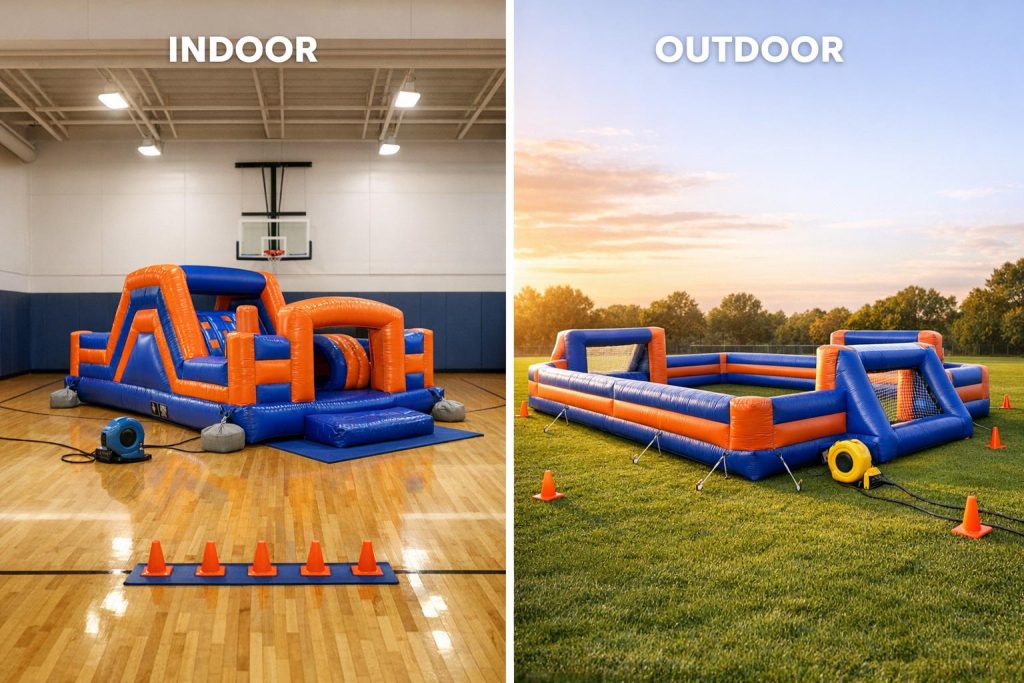
When planning an event with sports inflatables, the biggest decision is choosing between indoor and outdoor setups. Here’s the quick breakdown:
- Indoor Inflatables: Best for controlled spaces like gyms or halls. They’re smaller (under 6 feet tall), lightweight, and easy to set up. They work well in stable environments without weather concerns but are limited by ceiling height and floor space.
- Outdoor Inflatables: Perfect for larger attractions like obstacle courses or slides. They’re built with durable, weather-resistant materials but need secure anchoring and constant weather monitoring. Outdoor setups handle rougher conditions but require more time and effort to install.
Quick Comparison
| Feature | Indoor Inflatables | Outdoor Inflatables |
|---|---|---|
| Size | Smaller, under 6 feet tall | Larger, can span thousands of sq. ft. |
| Material | Lightweight nylon or PVC | Heavy-duty, UV-resistant PVC or PE |
| Setup | Simple, uses sandbags or weights | Complex, requires stakes and tethers |
| Durability | Lower, for occasional use | Higher, for frequent use |
| Weather Resistance | None | High; withstands sun, rain, and wind |
| Safety Concerns | Ceiling height, hard floors | Wind speeds, uneven terrain |
The choice depends on your venue, event size, and weather conditions. Indoor setups are great for smaller, weather-proof events, such as inflatable games for team building, while outdoor setups allow for bigger attractions and open spaces.
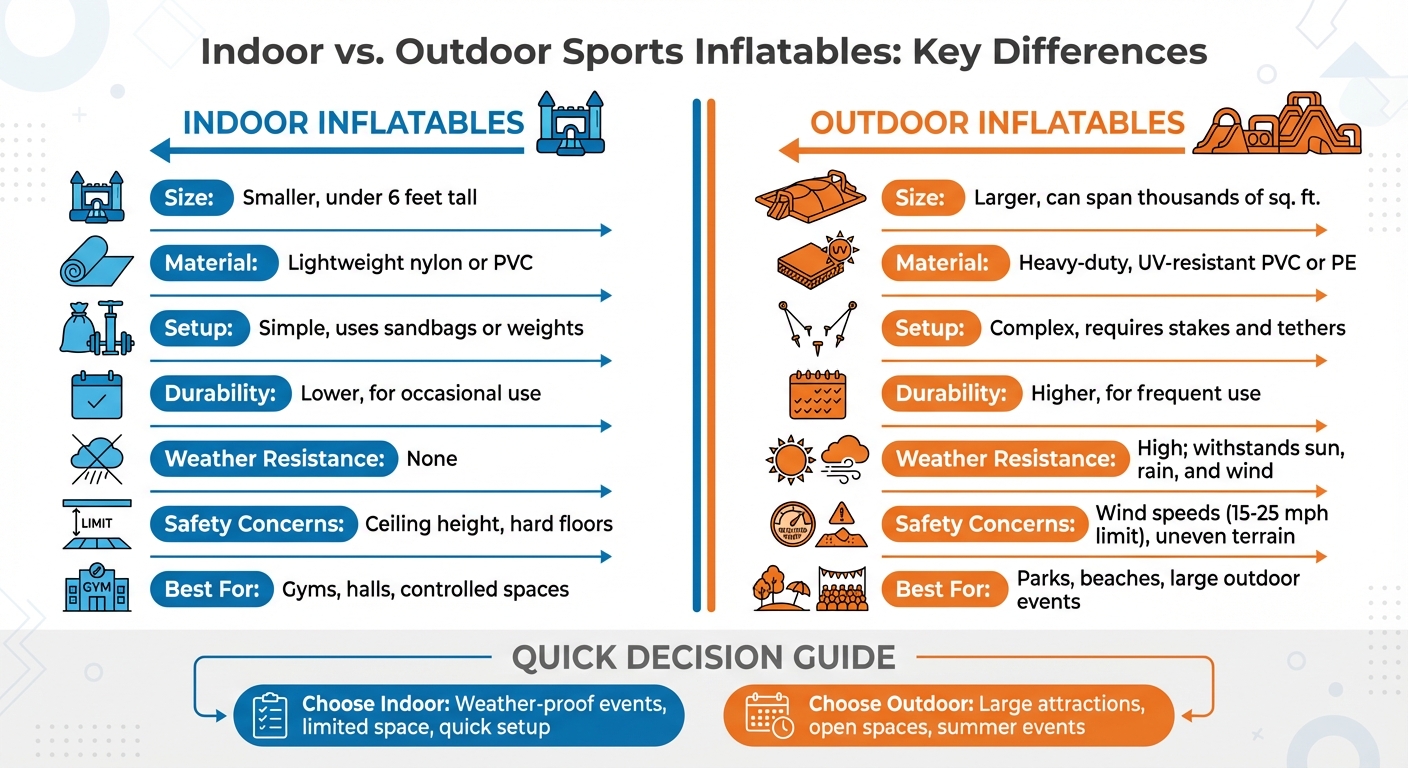
Indoor vs Outdoor Sports Inflatables Comparison Chart
Space and Size Requirements
Indoor Space Requirements
When setting up inflatables indoors, ceiling height is often the biggest limitation. Most standard bounce houses require at least 15 to 20 feet of vertical clearance for safe operation. However, smaller inflatables designed for indoor use are typically under 6 feet tall, making them a better fit for spaces like gyms, recreation rooms, or community halls. Anything taller than 6 feet might feel cramped in areas with low ceilings.
"An 8-foot tall winter inflatable might be a bit cramped in a low-ceiling rec room. Measure your ceiling height and floor space, and pick an inflatable that leaves some clearance on all sides." – custominflatables.com
Adequate floor space is just as important. You’ll need room not only for the inflatable itself but also for safe entry, exit, and the blower motor. The blower needs unobstructed airflow and shouldn’t be placed directly against walls or furniture. It’s also essential to avoid blocking doorways, vents, or other building infrastructure during setup.
While indoor setups focus on vertical constraints, outdoor setups shift the focus to horizontal space and ground conditions.
Outdoor Space Requirements
Outdoor venues provide more flexibility and allow for larger inflatables, such as obstacle courses, giant slides, or inflatable domes that can span thousands of square feet. With no ceiling to worry about, the emphasis moves to horizontal space and the condition of the ground.
The ground must be level and free of debris to prevent tipping or punctures. Outdoor terrain can be uneven, which poses safety risks and complicates anchoring. You’ll also need extra ground space around the inflatable for stakes, tethers, and other anchoring equipment to keep it secure, especially in windy conditions. For example, loose soil might require longer stakes to ensure stability, so checking the ground consistency beforehand is critical.
| Feature | Indoor Requirements | Outdoor Requirements |
|---|---|---|
| Primary Constraint | Ceiling height (15–20 ft minimum) | Weather conditions and level ground |
| Typical Size | Under 6 feet or tabletop (2–4 feet) | Varies from 8+ ft to large-scale courses |
| Anchoring | Minimal (controlled environment) | Heavy-duty stakes and tethers |
| Surface | Level, hard floors (may need padding) | Variable (grass, dirt, uneven) |
Material and Durability Differences
Materials for Indoor Use
Indoor inflatables are typically made from lightweight materials like nylon or thin PVC. These fabrics are chosen to ensure easy portability and simple setup in controlled environments where weather isn’t a factor. The construction is straightforward, often using standard stitching and single-layer fabric, which helps to keep costs low. Since these inflatables aren’t exposed to harsh conditions like UV rays, rain, or wind, they don’t require the rugged reinforcements found in outdoor models. As a result, indoor inflatables are best suited for occasional use rather than frequent rentals or high-traffic events. On the other hand, outdoor inflatables are specifically designed to handle more demanding conditions.
Materials for Outdoor Use
Outdoor inflatables rely on heavy-duty materials such as PVC vinyl, Dura-Lite™ Vinyl, or polyethylene (PE) to endure challenging environments. For example, high-quality PVC fabric can weigh up to 28 ounces per square yard, while standard PE fabric typically ranges from 12 to 15 ounces per square yard. This added weight translates to greater durability.
"PVC cladding consists of seven layers: a scrim of woven fabric sandwiched between two layers of PVC, which are then sandwiched between two layers of lacquer." – Legacy Building Solutions
These inflatables are built with UV-resistant coatings and waterproof layers to withstand sun, rain, and even snow. Following safety tips for water slides is also crucial when dealing with wet outdoor conditions. Reinforced stitching and multiple fabric layers provide the tear strength necessary to handle wind and repeated setups and teardowns. Professional-grade PVC fabric can last up to 25 years, while PE fabric generally has a lifespan of 15 to 20 years.
Material and Durability Comparison
The table below highlights the key differences between indoor and outdoor inflatables:
| Feature | Indoor / Residential Inflatables | Outdoor / Commercial Inflatables |
|---|---|---|
| Primary Materials | Nylon, Lightweight PVC | Heavy-duty PVC Vinyl, Dura-Lite™ Vinyl, PE |
| Durability | Low; designed for occasional use | High; designed for frequent, heavy traffic |
| Weather Resistance | Minimal; intended for controlled climates | High; UV-resistant and waterproof |
| Weight | Lightweight; easy to carry and transport | Heavier; often requires multiple people or dollies |
| Construction | Standard stitching | Reinforced seams and multi-layer cladding |
| Cost | Budget-friendly | Higher initial investment |
These material differences directly affect durability and functionality, making it essential to choose the right type of inflatable based on your needs. Indoor inflatables are ideal for affordability and ease of use, while outdoor models are built to handle years of tough conditions and frequent use.
Safety and Setup Differences
Indoor Safety and Setup
Indoor venues provide a controlled environment where factors like temperature, lighting, and noise remain stable throughout the event. Since there’s no risk of sudden weather changes, safety concerns are significantly reduced. The setup process is also quicker because there’s no need to anchor the inflatable with stakes – sandbags or water weights are sufficient to keep it secure.
Still, indoor setups have their own challenges. Hard surfaces such as hardwood, tile, or concrete require gym mats or foam padding at entry and exit points to minimize injury risks from falls. Additionally, ceiling height is a critical factor. You’ll need at least 1–2 feet of clearance above the inflatable’s peak, and you must ensure there are no obstructions like ceiling fans or light fixtures. To ensure safety, maintain a 3–5 foot buffer zone around the inflatable for easy access and proper blower placement.
Outdoor Safety and Setup
Outdoor setups face a completely different set of challenges due to exposure to environmental variables. Wind is the most significant safety concern. Since 2000, wind-related incidents have caused 479 injuries and 28 fatalities. Most manufacturers advise deflating inflatables when wind speeds exceed 15 mph, though some models can tolerate up to 25 mph gusts.
"Inflatable attractions are the least regulated amusement device and present significant risk exposures that should not be taken lightly." – Rich Powers ARM, Executive Vice President of Risk Services, American Specialty Insurance
Temperature is another key consideration. If outdoor temperatures fall below 40°F, the commercial vinyl material stiffens and becomes prone to cracking. Outdoor installations also require heavy-duty ground stakes or tent stakes driven into grass, paired with tether lines for taller inflatables to evenly distribute weight. This process takes more time due to the need for clearing the ground, staking, and securing tethers.
Safety and Setup Comparison
The table below highlights the main differences between indoor and outdoor setups:
| Feature | Indoor Setup | Outdoor Setup |
|---|---|---|
| Weather Protection | Fully protected from rain, wind, and extreme temperatures | Vulnerable to weather; requires constant monitoring |
| Wind Risk | None | High; deflation required at 15–25 mph gusts |
| Securing Method | Sandbags or water weights | Ground stakes, tent stakes, and tether lines |
| Surface/Terrain | Level floors; padding needed on hard surfaces | Uneven terrain; debris must be cleared |
| Injury Risk | Lower; controlled environment and level floors | Higher; risks from wind gusts and uneven terrain |
| Installation Time | Faster (no staking required) | Longer due to staking and tethering |
Understanding these differences is essential when deciding whether an indoor or outdoor setup is best for your inflatable event.
When to Choose Indoor vs. Outdoor Inflatables
Best Events for Indoor Inflatables
Indoor inflatables are a great choice when you need protection from unpredictable weather or want a controlled environment. Places like gyms, churches, auditoriums, and convention centers provide shelter from rain, wind, and extreme temperatures, making them perfect for winter events, corporate gatherings, product launches, or seminars.
These inflatables are designed to fit spaces with limited ceiling height, so it’s essential to check the venue’s dimensions to ensure proper clearance.
Another advantage of indoor settings is the added safety they offer, especially for young children or individuals with mobility challenges. The stable temperature, consistent lighting, and manageable sound levels make the experience more comfortable overall. However, keep in mind that blower noise may be more noticeable indoors compared to open-air environments.
If you’re planning an event that requires larger attractions, outdoor venues might be a better fit.
Best Events for Outdoor Inflatables
Outdoor inflatables shine when you have access to wide-open spaces. Parks, beaches, stadiums, school carnivals, and block parties are ideal for hosting larger attractions like water slides, dunk tanks, and giant obstacle courses. These venues also provide natural scenery and fresh air, which add to the lively atmosphere.
Outdoor setups are perfect for summer events with water slides, dunk tanks that are always a hit at fundraisers or school field days, and obstacle courses vs. inflatable games that bring excitement to music festivals, marathons, or team-building events.
When using inflatables outdoors, safety should be a top priority. Always power the blowers with a Ground Fault Circuit Interrupter (GFCI) outlet and ensure the electrical connections are elevated to avoid water hazards. Be prepared for weather changes – deflate the inflatables if winds exceed 15–25 mph or if storms are on the way. While outdoor venues may save on rental costs, additional expenses like tenting, portable restrooms, or backup plans for bad weather might offset those savings.
Conclusion
The choice between indoor and outdoor inflatables boils down to the specifics of your event. Indoor inflatables are ideal for controlled spaces where ceiling height and floor dimensions limit the size – usually under 6 feet tall. They offer protection from unpredictable weather and maintain stable temperatures, making them a reliable option for smaller venues.
On the other hand, outdoor inflatables let you go big with attractions like water slides and obstacle courses that wouldn’t fit indoors. That said, they require close weather monitoring – winds over 15–25 mph mean it’s time to deflate for safety. Built with heavier, more durable materials, outdoor inflatables are made to handle exposure to the elements.
Safety considerations also vary. Indoor setups focus on proper electrical placement, while outdoor installations demand GFCI outlets, weather-resistant extension cords, and secure anchoring using stakes and tethers. It’s crucial to keep outdoor electrical connections elevated to avoid water exposure and potential hazards.
Bouncy Rentals USA offers a wide range of inflatables tailored to both indoor and outdoor events. Whether it’s a winter gathering in a gym or a summer celebration at the park, their equipment is sanitized, insured, and designed to meet safety standards. Their team takes care of delivery, setup, and safety checks, so you can focus on enjoying the event.
Ultimately, the right inflatable depends on your venue, weather conditions, and the scale of entertainment you’re planning. Choose wisely, prepare for the environment, and you’ll be set to create an unforgettable experience for your guests.
FAQs
How do I choose the right inflatable size for my venue?
To pick the right inflatable size, start by measuring the length, width, and height of your venue. Make sure there’s enough room for safe clearance around the inflatable. Keep in mind the number of guests and plan for extra space to accommodate entry, exit, and supervision areas. If you’re uncertain, reach out to your inflatable provider – they can help you find the best option for your space and event requirements.
What wind or temperature limits make outdoor inflatables unsafe?
Outdoor inflatables can pose safety risks in certain weather conditions. For instance, wind speeds over 25-30 mph can lift inflatables off the ground, creating a hazardous situation. Similarly, temperatures below 50°F can weaken the material, making it less reliable and potentially unsafe. To keep your event safe, always keep an eye on the weather and adjust plans if needed.
What extra safety gear do I need for indoor vs. outdoor setups?
When setting up indoor inflatables, think about a few key safety measures. Start with ventilation systems to ensure fresh air circulation. Add padding or mats around the area to minimize injuries from falls, and always have fire safety equipment like extinguishers handy. Make sure emergency exits are clearly marked and easily accessible.
For outdoor setups, prioritize stability by using stakes or weights to keep inflatables securely in place. Lay down ground coverings to create a softer landing surface and consider weather-appropriate gear, such as sunshades to shield from heat or fans for cooling. Additionally, protect electrical cords and blowers from moisture to prevent accidents.
