Inflatable rentals can make any event more enjoyable, but safety must come first. Without proper emergency procedures, accidents and injuries are more likely. Here’s what you need to know:
- Why Emergency Protocols Matter: They help prevent injuries, reduce legal risks, and meet insurance requirements.
- Key Risks: Weather changes, equipment malfunctions, overcrowding, and structural issues are the primary concerns.
- What You Should Do:
- Conduct pre-event risk assessments (check ground stability, remove hazards, and ensure proper setup).
- Monitor weather and stop operations during high winds or storms.
- Train staff for emergencies like power outages or medical incidents.
- Create a safety perimeter around inflatables.
- Post-Incident Steps: Document all incidents, review protocols, and update safety measures as needed.
Inflatable Rental Safety Statistics and Emergency Response Guide
Risk Assessment and Site Preparation
Before setting up an inflatable, it’s crucial to thoroughly evaluate the site to identify and address any potential hazards. Start by walking through the designated area to spot risks that could compromise the safety of participants. A stable, level surface is a must – uneven or muddy terrain can weaken anchoring systems and create slippery conditions, increasing the likelihood of accidents.
Pre-Event Risk Assessment Checklist
Begin with a detailed inspection of the ground to ensure it’s level and stable. Remove any debris, such as broken glass or sharp objects, and clear away pet droppings that could damage the inflatable or pose health risks. Overhead clearance is equally important – check for trees, power lines, or nearby structures that could interfere with the inflatable during setup or operation. Additionally, make sure power sources are within 50 feet to minimize the need for long extension cords, which can create tripping hazards or lead to electrical problems.
Using a comprehensive checklist that covers ground conditions, overhead obstacles, and power connections can significantly reduce risks and help prevent accidents. A well-prepared checklist also ensures you’re ready to handle emergencies efficiently.
Common Hazards to Watch For
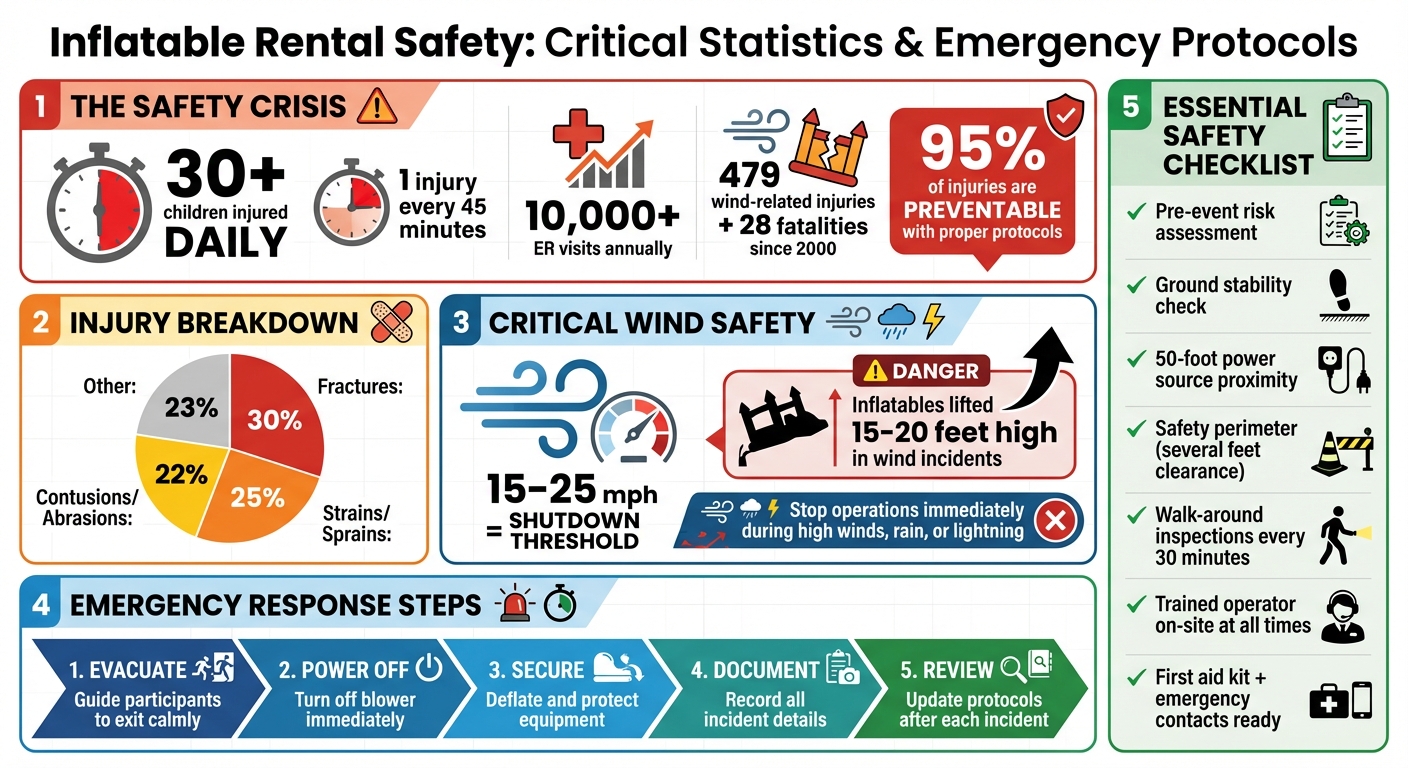
Weather is one of the biggest safety concerns. Since 2000, wind-related incidents have resulted in 479 injuries and 28 fatalities, with some inflatables being lifted as high as 15 to 20 feet. Most manufacturers recommend shutting down operations when wind gusts reach 15 mph, though some allow for limits up to 25 mph – always adhere to the manufacturer’s specific guidelines.
Equipment failures, such as power outages or blower malfunctions, can cause rapid deflation, potentially trapping or injuring participants. Overcrowding is another issue, as exceeding weight limits increases the risk of collisions. Inside the inflatable, rough play or sharp objects can lead to punctures or injuries. Alarmingly, studies reveal that bounce house injuries now average over 30 children per day – approximately one child every 45 minutes. Of these, fractures account for 30%, strains and sprains 25%, and contusions or abrasions 22%.
These statistics highlight the importance of setting up a well-defined safety perimeter to minimize risks.
Setting Up a Safety Perimeter
Create a buffer zone around the inflatable by maintaining several feet of open space on all sides. This controlled area allows for quick evacuations during emergencies and helps prevent unauthorized access. Ensure the inflatable is positioned away from fences, trees, sprinkler systems, and other obstructions.
For additional safety, consider installing padded enclosures at least two feet away from the bounce house and four feet high to cushion any unexpected falls. Clearly mark entry and exit points, and if the setup is on concrete or asphalt, use soft matting around these areas to reduce the risk of injury. During the event, conduct walk-around inspections every 30 minutes to confirm the perimeter remains secure and the inflatable is functioning properly.
Step-by-Step Emergency Procedures
At Bouncy Rentals USA, ensuring safety is our number one priority. Emergencies can happen, and each situation requires specific actions to safeguard participants and protect your equipment. Below are detailed procedures for various emergency scenarios.
Weather-Related Emergencies
Inflatables should never be used during bad weather. If winds exceed 20 mph or there’s rain or lightning, stop all operations immediately. Always adhere to your manufacturer’s safety guidelines.
When severe weather is on the way, calmly evacuate all participants. Guide everyone to exit in an orderly manner [15, 16]. Once the inflatable is clear, turn off the blower to deflate the unit [7, 15, 16]. This step prevents the inflatable from becoming airborne or damaged.
After deflation, take precautions to protect the equipment. Fold mazes and move them to a sheltered spot, or fold bounce houses over to shield the interior from rain and debris. Wait until the weather completely clears and inspect the equipment for damage before resuming operations. These steps are essential to maintaining safety and preventing equipment damage.
Power or Blower Failures
When weather isn’t the issue, equipment malfunctions like power outages or blower failures require immediate action. If the inflatable starts to deflate, calmly instruct participants to stop, stay composed, and exit safely. Make sure your staff knows the specific procedures for unplanned deflation, as outlined in the operating manual for each inflatable.
Once everyone has exited, turn off and disconnect the blower. Keep a fire extinguisher rated for electrical fires on hand in case of emergencies. Do not attempt to restart the equipment until the issue has been identified and resolved. If you’re unsure, contact your rental provider for assistance before continuing operations. Quick and careful action can prevent further complications and ensure everyone’s safety.
Structural or Anchoring Failures
If you notice rips, tears, or a loss of air in the inflatable, evacuate all participants immediately. Help riders exit calmly and confirm that no one is left inside [7, 15, 16].
Do not try to repair damaged equipment yourself. Instead, contact your rental provider right away for help and stay with the inflatable until assistance arrives [15, 16]. Be sure to document the incident, including what happened, the time it occurred, and any relevant details. This information is crucial for incident reports [15, 16].
Medical Emergency Response
For minor injuries like scrapes or bumps, use your on-site first aid kit to clean wounds, apply bandages, and monitor the injured person for any changes. Always keep a fully stocked first aid kit nearby.
In the case of serious injuries – such as fractures, head trauma, breathing difficulties, or unconsciousness – call 911 immediately. Clear the area around the injured person and keep them as still as possible until medical professionals arrive. Assign a staff member to meet paramedics and guide them to the scene. Document the incident thoroughly, including witness accounts, the time, and actions taken, as this information is vital for insurance and safety reviews.
Staff Responsibilities, Training, and Communication
An effective emergency plan depends not only on detailed procedures but also on a team that’s ready to act. A well-prepared team is the backbone of any successful response, and that starts with clearly defined roles and regular training.
Assigning Staff Roles During Emergencies
Safety starts with having a trained operator keeping an eye on the inflatable at all times. This isn’t just a recommendation – it’s a critical safety standard. Assign specific roles to your team: a lead operator to oversee the situation and make evacuation decisions, attendants to manage participants, and a supervisor to handle interactions with parents and bystanders. When everyone knows their responsibilities ahead of time, responses to emergencies become quicker and more coordinated. These role assignments are the first step in building a team that’s ready for anything.
Emergency Training and Practice Drills
Training shouldn’t stop at day-to-day operations. Incorporate hands-on drills for situations like deflation, sudden weather evacuations, or medical emergencies. The Safe Inflatable Operators Training Organization (SIOTO) offers a basic safety course that covers essential topics like proper deflation techniques, electrical setup, and communication strategies for enforcing rules. This course typically takes 2 to 4 hours, providing a solid introduction to inflatable safety. But classroom learning alone isn’t enough – practice drills are equally important. Running through real-life scenarios, such as unexpected weather changes or equipment malfunctions, ensures your team can act quickly and effectively. As SIOTO emphasizes:
"When emergencies happen, preparation matters. Our training includes emergency evacuation procedures, CPR basics, and first aid awareness so your staff knows exactly what to do."
Communication Tools and Methods
Clear communication is key during emergencies. Use direct commands to guide participants, and place visible safety signs near inflatable entrances to make rules and warnings obvious to both parents and children. Keep an up-to-date emergency contact list handy, including your rental provider’s phone number and 911 for urgent situations. For equipment issues, your rental company should be your first call. Training should also include strategies for effective communication with parents and venue staff, ensuring safety rules are upheld and responses are swift when time is critical.
Post-Incident Actions and Protocol Updates
Taking the right steps after an incident safeguards everyone involved, meets insurance requirements, and helps prevent similar issues in the future. These follow-up measures build on earlier procedures, ensuring safety protocols stay effective and up-to-date.
First Aid and Scene Management
Once the immediate emergency response is handled, managing the scene becomes the priority. Shut down the inflatable immediately and evacuate all participants from the area. Make sure a first aid kit is readily available and that staff members are trained in first aid and CPR. Minor injuries, like scrapes or bruises, can usually be addressed with the kit on hand. For more serious injuries, call 911 right away and ensure emergency responders are directed to the correct location.
Incident Documentation and Records
After the situation is under control, focus on documenting the incident thoroughly. This step is crucial for insurance claims and liability protection. Record all relevant details, including the time of the incident, weather conditions, participant information, witness statements, and any visible damages. Take photographs to support your report. If you notice any damage to the equipment – such as tears, punctures, or issues with the blower – inform your rental provider immediately and document the condition of the equipment before making any changes. Between 2000 and 2021, there were 479 reported cases of serious bounce house injuries.
Protocol Review and Updates
Once the immediate concerns and documentation are addressed, take time to evaluate the incident and identify areas for improvement. Review the event with your team to determine what worked well and what could be improved, focusing on evacuation procedures, communication, and role assignments. Use these findings to update safety protocols and enhance staff training. Regularly revisiting and refining these measures ensures that your team remains prepared and that your safety standards stay strong for future events.
Conclusion
Emergency protocols are what stand between a fun-filled event and an avoidable disaster. Each year, over 10,000 bounce house–related visits to the emergency room serve as a stark reminder of why these measures are so important. In fact, 95% of injuries involving inflatables can be avoided with proper safety precautions.
By establishing clear plans for weather issues, equipment malfunctions, and medical emergencies, your team can act quickly and confidently when every second matters. From pre-event risk evaluations to thorough post-incident documentation, the steps outlined in this guide create multiple layers of safety. These safeguards not only protect participants but also help limit your liability.
Teaming up with professional rental services can make implementing these protocols much easier. Companies like Bouncy Rentals USA offer well-maintained equipment and trained staff who are skilled in setup, securing inflatables, and handling emergencies. When choosing a provider, be sure to ask about their insurance, staff training, SIOTO certification, and the specific safety protocols they bring to the table.
As we’ve discussed, thorough risk assessments and well-practiced emergency plans are essential for protecting both your attendees and your business. By prioritizing safety, training your team, and working with experienced professionals, you create an event environment that’s both secure and enjoyable.
FAQs
What are the most common emergencies to prepare for during inflatable rental events?
When hosting an event with inflatable rentals, some of the most common emergencies include severe weather conditions such as high winds, lightning, or heavy rain. These situations demand immediate action, including evacuating the area and shutting down the equipment. Another potential issue is the sudden deflation or collapse of the inflatable, which can lead to falls, entrapment, or injuries if not handled quickly.
To keep everyone safe, it’s essential to stay on top of weather updates, properly secure the inflatables, and follow the safety guidelines provided by the rental company. If you’re working with Bouncy Rentals USA, their team provides reliable equipment and expert advice to help ensure your event is both fun and safe.
How can I train my staff to handle emergencies with inflatable rentals?
Proper training is essential to equip your team to handle emergencies with confidence. Start by developing a detailed, written emergency response plan. This plan should cover critical steps for scenarios like deflation, injuries, or equipment issues. Include clear instructions on turning off the blower, evacuating riders safely, administering basic first aid, and contacting emergency services. Share this plan with your team and ensure copies are readily available at each inflatable’s control station.
Hands-on training is just as important. Walk your staff through the manufacturer’s manual, demonstrate proper anchoring and staking methods, and conduct practice drills for emergencies like a blower suddenly failing. To take it a step further, consider having team members earn certifications from safety organizations to deepen their preparedness.
Regular updates and checks will keep everyone sharp. Before each event, verify that your staff can confidently perform emergency procedures, identify exits, and access a fully stocked first-aid kit. By combining clear guidelines, practical training, and consistent oversight, your team will be well-prepared to manage any inflatable-related emergency swiftly and safely.
What should I include in a safety checklist before setting up an inflatable rental?
To ensure your event runs smoothly and safely when using inflatable rentals, it’s essential to tick off a few key safety measures beforehand:
- Inspect the Site: Choose a flat, debris-free area with at least 5–6 feet of clearance from obstacles like trees, fences, or power lines. This ensures a safe setup space.
- Check the Equipment: Verify that the inflatable has been cleaned, sanitized, and inspected for safety standards. A valid test certificate is a must.
- Monitor Weather Conditions: Avoid using inflatables in winds over 15 mph, during rain, or in extreme temperatures. Keep an eye on the forecast and be ready to pause or shut down operations if necessary.
- Secure Anchoring and Inflation: Properly anchor the inflatable with stakes or weights and ensure continuous airflow if the equipment requires it.
- Supervise the Activity: Assign a trained attendant to oversee the inflatable. They should enforce safety rules, manage the number of users, and ensure everyone plays safely.
By following these steps, you’ll create a fun and secure environment for all attendees. For stress-free rentals and professional support, reach out to Bouncy Rentals USA – where safety and fun are always the top priorities!