Backyard water slide parties are a blast, but safety is the top priority. Here’s how to ensure a fun, worry-free event:
- Pick a Safe Spot: Use a flat, grassy area with 5–10 feet of clearance on all sides. Avoid obstacles like trees, fences, or power lines.
- Prep the Yard: Clear rocks, sticks, and other hazards. Check for sprinkler heads or uneven ground.
- Utilities: Place the slide within 50–75 feet of a water spigot and 50–100 feet of a grounded power outlet. Use a GFCI outlet for safety.
- Inspect Equipment: Check the inflatable for tears, worn spots, or loose seams. For more details, see our guide to inflatable water slides. Secure it with stakes or sandbags, and monitor wind speeds (deflate if winds exceed 15 mph).
- Set Rules: Enforce one-at-a-time sliding, feet-first only, and no rough play. Group guests by age to avoid accidents.
- Supervise: Assign a dedicated adult to oversee the slide and keep things organized.
- Comfort and Weather: Provide shaded rest areas, sunscreen, and plenty of water. Monitor weather conditions and have a plan for rain or high winds.
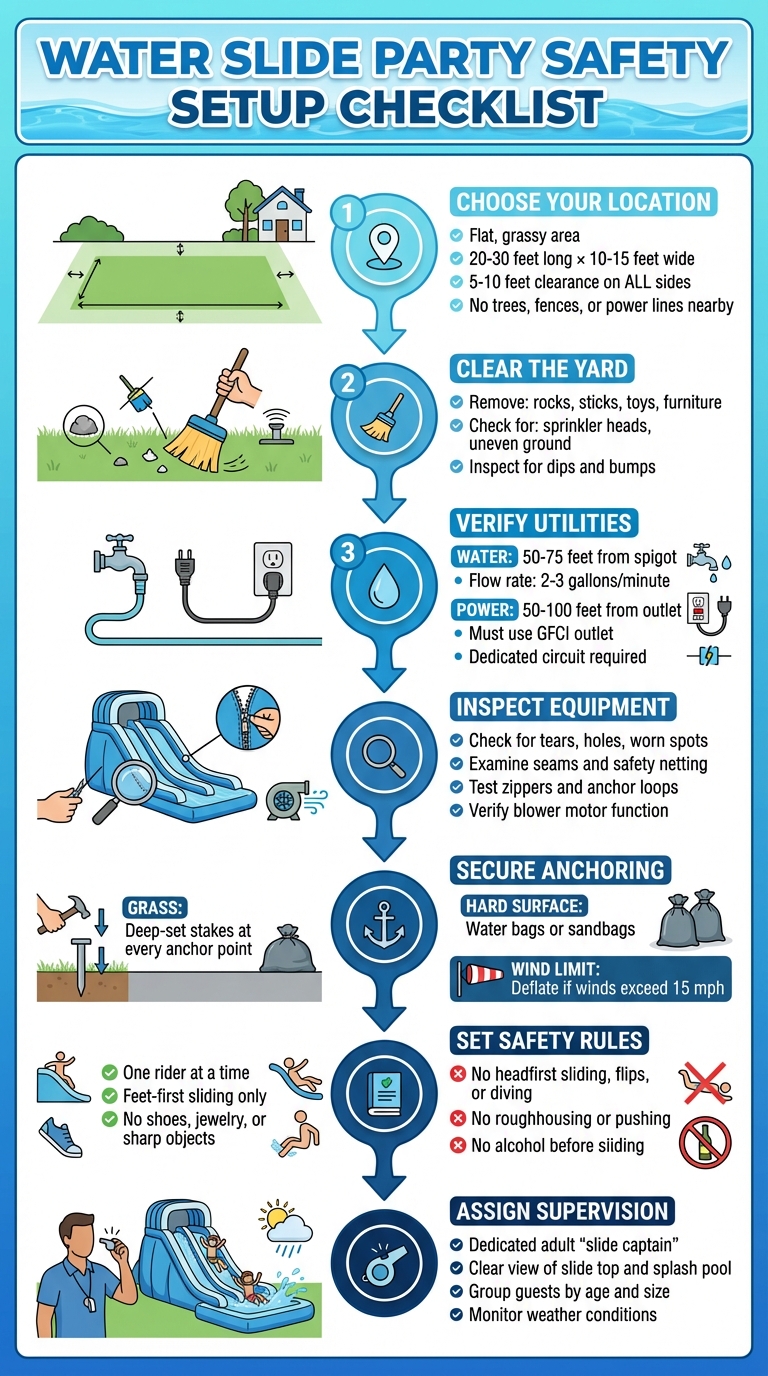
Water Slide Party Safety Setup Checklist: 7 Essential Steps
Preparing Your Yard for a Water Slide Setup
Choose the Right Location
Pick a flat, grassy area that can comfortably fit the inflatable, typically 20–30 feet long and 10–15 feet wide, with an extra 5–10 feet of space around all sides. This additional clearance is crucial for securing anchors, ensuring proper airflow, and providing safe entry and exit points.
Look for a spot free of obstacles like trees, fences, power lines, and overhanging branches. Also, think about sun orientation – placing the climbing side of the slide facing north or east can help keep the surface cooler during the afternoon. To keep things tidy, plan for a "dry-off lane" at the exit, stocked with towels, so guests don’t track water into busy or indoor spaces.
Clear and Inspect the Space
After choosing the location, take time to clear the area. Remove anything that could cause issues, such as rocks, sticks, toys, garden furniture, decorations, or pet waste. Even small items can puncture the inflatable or create tripping hazards for energetic kids.
Examine the space for hidden problems like sprinkler heads, uneven ground, or low spots where water might collect. Walk across the area to check for dips, bumps, or slopes that could compromise the slide’s stability.
"A little preparation goes a long way in combining water slides and party rentals for a breeze." – Orbit Moonwalks
Once the space is clear and safe, make sure utilities are accessible.
Confirm Access to Utilities
The setup area should be within 50 to 75 feet of a water spigot and within 50 to 100 feet of a grounded power outlet. Water slides use 2 to 3 gallons per minute, which adds up to a few hundred gallons over the course of several hours – about the same as filling a kiddie pool.
Before the event, test your hose length and water pressure to ensure the sprayer reaches the slide without overextending the hose. For power, connect the blower motor to a Ground Fault Circuit Interrupter (GFCI) outlet on a dedicated circuit to avoid tripping breakers. Be sure to keep electrical cords away from water runoff and walkways.
| Utility Requirement | Recommended Specification | Safety Note |
|---|---|---|
| Water Hose Distance | 50–75 feet | Avoid stretching to prevent kinks. |
| Power Cord Distance | 50–100 feet | Use a dedicated circuit. |
| Water Consumption | 2–3 gallons per minute | Ensure continuous flow capacity. |
Checking Equipment Safety
Inspect Equipment Before Use
Once the setup area is ready, take a close look at the inflatable before turning on the blower. Pay attention to any tears, holes, or worn spots, especially along seams and high-use areas like the slide surface and landing zone. Make sure safety netting and reinforced seams are in good condition and securely attached. Even small damage can worsen quickly during use.
Even if the equipment has been pre-inspected, do a quick check on zippers, anchor loops, and the blower motor. Ensure zippers close properly, anchor loops are sturdy, and the blower motor runs smoothly. If you notice anything unusual, reach out to your rental provider right away – better safe than sorry, especially before guests arrive.
Use Proper Anchoring Methods
Every anchor point on the inflatable needs to be secured. For grass setups, use deep-set stakes to secure each tie-down loop. After anchoring, give each point a firm tug to confirm it’s secure and won’t slip.
If you’re setting up on a hard surface like concrete, opt for weighted water bags or sandbags at each anchor point instead of stakes. While grass provides better grip, hard surfaces can work just as well with proper weighting and some extra padding to protect the inflatable material. Keep an eye on the weather – if wind speeds hit 15 mph or higher, deflate the slide immediately to avoid any safety risks.
Once the inflatable is securely anchored, it’s time to make sure the water flow is just right.
Test Water Flow and Pressure
Before guests arrive, connect your hose and turn on the water. Watch how it flows across the slide surface – you’re aiming for steady, even coverage with no dry spots. Low water pressure (under 10 PSI) can leave areas dry, which increases friction and the risk of skin burns from the material. Adjust the spigot as needed to keep the slide consistently wet but not overly soaked. Let the water run for a few minutes to confirm your hose can maintain a steady flow throughout the event.
Setting Safety Rules and Supervision
Assign Adult Supervision
Having an adult in charge is a must. Assign at least one responsible adult as the "slide captain" to oversee the inflatable water slide during the event. Their job? Keep a close eye on the slide, enforce the rules, and act fast if something goes wrong.
"Adult supervision is a non-negotiable requirement when using an inflatable water slide. Assign a dedicated adult to monitor activities, enforce rules, and respond promptly to any potential issues." – Kangaroo Bounce Party
Position your slide captain so they have a clear view of both the top of the slide and the splash pool. They should manage the flow of riders, ensuring each person exits the landing area before signaling the next to go. Tools like whistles or hand signals can help keep the process smooth and safe.
With a supervisor on duty, the next step is setting clear rules for everyone to follow.
Set Usage Guidelines
Once supervision is in place, establish clear slide rules to promote safe play. Post these rules at the slide entrance so everyone knows what’s expected. Key guidelines include:
- One rider per lane.
- Slide feet-first only.
- No shoes, jewelry, glasses, or sharp objects allowed.
- Absolutely no headfirst sliding, flips, or diving – these can lead to serious injuries.
Prohibit roughhousing like pushing or climbing on the inflatable. Riders should leave the splash pool quickly to make room for the next person. And here’s a critical rule: anyone who’s had alcohol must stay off the slide – this is non-negotiable for safety reasons.
Group Guests by Age and Size
Mixing kids of different ages and sizes can lead to accidents and make younger children feel overwhelmed. To avoid this, group guests based on age and slide suitability. You can use wristbands or verbal announcements to organize timed rotations for different age groups.
| Age Group | Recommended Slide Height | Safety Focus |
|---|---|---|
| Toddlers (under 5) | Small slides with gentle slopes | Keep them within arm’s reach; help them navigate. |
| School-Aged (5-12) | 10 to 18 feet | Enforce "one-at-a-time" and "feet-first" rules; use a buddy system. |
| Teens (13+) | 18 to 22+ feet (dual-lane) | Watch for risky behavior like stunts, headfirst sliding, or flips. |
| Adults | Rated for adult weight | Ensure the slide is designed for adult use; no alcohol before sliding. |
If older kids are splashing too aggressively near younger ones, step in to separate the groups or adjust the rotation schedule. With these rules and proper supervision, you’ll create a safe and enjoyable water slide experience for everyone.
Final Preparations on Party Day
Double-Check Setup and Equipment
Before the fun begins, take a moment to ensure everything is secure and safe. Do a final safety check by pulling on all anchor points and scanning the 5–10 foot buffer zone around the slide. Look for any unexpected items like toys, garden tools, or debris that may have appeared since setup. This extra step helps maintain a safe play area.
Inspect the slide surface as well. On particularly hot days, touch the vinyl to check its temperature – it can get hot enough to cause discomfort. Make sure water is evenly distributed across the sliding surface by connecting the water hose correctly. Double-check that the usage guidelines, including weight limits and age requirements, are clearly visible at the slide entrance. Also, confirm that the dry-off lane remains clear for smooth transitions.
Once the equipment is secure, it’s time to think about weather-related precautions.
Prepare for Weather and Comfort
Weather can be unpredictable, so having a plan in place is key. Assign someone to monitor conditions for rain, strong winds, or lightning, and decide in advance how to pause activities if needed. A good tool to have on hand is an anemometer to measure wind speeds throughout the event.
"Deflate the slide if winds exceed 15 mph to prevent it from becoming a hazard. Keep an anemometer on hand to monitor wind conditions." – Kangaroo Bounce Party
If the wind reaches 15 mph, act quickly: remove all riders, unplug the motor, and secure the inflatable. After rain, check that the ground is firm enough to hold the anchors securely. To keep guests comfortable, set up shaded rest areas using tents or umbrellas near the slide. This helps prevent heat exhaustion and gives everyone a place to cool off. Additionally, identify a safe alternative location and establish a communication plan in case lightning strikes.
Set Up Snack and Rest Zones
With safety and weather addressed, focus on guest comfort by organizing snack and rest zones. Place seating away from the slide but within sightlines so supervisors can keep an eye on the action. If possible, position the rest area to face north or east to avoid direct sunlight during the hottest part of the day.
Set up a station stocked with sunscreen and extra towels near the seating area for convenience. Keep water dispensers or coolers filled so guests can stay hydrated. For larger events like school field days or corporate gatherings, consider assigning "slide captains" or trained staff to manage guest flow between the slide and rest areas. A well-organized transition area with towel baskets and mats can help control water runoff and give guests a spot to dry off before heading to the snack zone.
Conclusion
Throwing a successful water slide party comes down to three main priorities: secure setup, active supervision, and keeping an eye on the environment. Using metal stakes for grassy areas or sandbags on hard surfaces ensures your slide stays in place. Assigning a "slide captain" to manage one-at-a-time sliding keeps things organized, and monitoring weather conditions helps avoid any surprises.
"A secure setup, clear safety rules, and adult supervision are the cornerstones of a fun, worry-free experience." – Operation Jump
Preparation makes all the difference. Clearing a 5–10 foot buffer zone around the slide, setting up dry-off lanes, and creating rest areas are simple steps that enhance safety and comfort for your guests. Commercial-grade inflatables are designed for heavy use, and renting from fully insured companies ensures you’re covered if anything unexpected happens.
When the fun wraps up, leave the slide inflated for 15–20 minutes after shutting off the water. This extra time allows it to dry thoroughly, preventing mold and extending its lifespan.
With safety measures in place, you can focus on enjoying the celebration. Bouncy Rentals USA provides sanitized, insured water slides and party equipment, delivered and set up by experienced professionals. Whether it’s a backyard birthday or a school event, their high-quality inflatables and reliable service let you relax and create lasting memories while they handle the logistics.
FAQs
Do I need a permit for a backyard water slide party?
Whether a permit is required depends on the rules in your area. For private backyard parties, permits are generally not needed, but it’s always a good idea to double-check with your city or county to stay on the safe side. If you’re planning to host your event in a public park or other shared space, a permit might be required. Reach out to your local parks department or relevant authorities to find out exactly what’s needed.
What should I do if someone gets hurt on the slide?
If someone gets hurt, the first thing to do is focus on their safety. Provide immediate assistance and take a moment to assess the injury. Make sure they’re as comfortable as possible, avoid moving them unnecessarily, and keep the area around them clear. If the injury seems serious, don’t hesitate – contact medical professionals right away.
After addressing the immediate situation, notify the rental provider about the incident and follow any safety procedures they have in place. To reduce the risk of injuries at your event, ensure there’s proper supervision and that everyone knows and follows the rules. A little preparation goes a long way in keeping everyone safe.
How can I reduce water use during the party?
To make your water slide party more water-efficient, start by checking for leaks before the event. When the slide isn’t in use, cover it with a tarp to reduce evaporation. Using a timer to manage water flow is another smart move, as is exploring a water recycling system to reuse water effectively. Make sure to inspect all connections to avoid unnecessary waste, and consider adjusting the water pressure. This way, you can conserve water without compromising the fun!