Inflatables face harsh weather challenges that can shorten their lifespan by 25–30% without proper care. Key culprits include UV rays, humidity, temperature extremes, and wind. UV exposure weakens material bonds, causing brittleness and fading. Moisture leads to mold, mildew, and seam failures. Heat softens materials, while freezing temperatures make them brittle. Wind adds stress, risking tears and structural damage.
Key Takeaways:
- UV Damage: Causes fading, brittleness, and microcracks. Use UV sprays and store inflatables in shaded areas.
- Moisture Issues: Leads to mold, mildew, and seam weakening. Always dry thoroughly before storage.
- Temperature Effects: Heat stretches materials, cold makes them brittle. Avoid extreme conditions.
- Wind Risks: Strains seams and anchors. Secure inflatables with stakes or weights. Following an inflatable setup safety checklist ensures all anchors are properly positioned.
How to Extend Lifespan:
- Apply UV protectants monthly.
- Store in climate-controlled spaces (60–75°F).
- Use tarps or soft surfaces to prevent abrasion.
- Inspect seams and high-stress areas regularly.
Proactive care can extend an inflatable’s lifespan by 3–5 years, saving you from costly replacements.
UV Exposure and Material Breakdown
Sunlight doesn’t just fade colors – it destroys the chemical structure of inflatable materials at the molecular level. UV radiation disrupts key polymer bonds in materials like PVC and TPU, setting off chain reactions that cause PVC to yellow and TPU to degrade. For TPU, UV exposure triggers photo-oxidation, damaging urethane linkages and leading to micro phase separation.
This process unfolds through a chain reaction. Christopher G. Robertson, PhD at Vecor Technologies, explains:
"For photodegradation of PVC, the principal outcome is chain scission which is more severe near the surfaces of the UV-exposed material".
As the surface breaks down, it develops a chalky texture and becomes increasingly brittle. Knowing how this happens can help you take steps to extend the life of your inflatable.
The statistics are sobering. Studies show UV exposure can slash the tearing energy of polyurethane elastomers by over 98% in just five months. TPU samples, for instance, can shift from clear to yellow in only six hours of UV exposure, eventually turning brown after 72 hours. High-quality weather-resistant bounce houses made with PVC-coated materials can retain about 95% of their strength after a year outdoors – but only if they’re made with built-in UV protection. These molecular changes lead to visible damage, which we’ll outline below.
Identifying UV Damage
Catching UV damage early can prevent costly failures. One of the first signs is color fading – vivid graphics lose their vibrancy, while whites take on yellow or brown tones. This discoloration, often referred to as "chalking", signals deeper molecular damage.
But it’s not just about appearance. Feel the material. UV-damaged inflatables become stiff and brittle as plasticizers break down. Flexibility diminishes, and the surface may develop microcracks or voids. Pay extra attention to high-stress areas like seams and anchor points during inspections – these spots often show damage first because weakened material struggles to handle internal pressure. You can also compare exposed sections to protected areas, such as the underside or interior folds, to gauge the extent of degradation. Spotting these early warning signs is critical for applying protective measures in time.
Protecting Inflatables from Sun Damage
The best defense starts with manufacturing. High-quality inflatables are made with PVC formulations that include Titanium Dioxide (TiO₂), which absorbs and scatters UV rays before they can harm the polymer chains. Adding just 5% TiO₂ by weight can lower the yellowness index from 21.8 to 5.2. Organic UV absorbers, such as benzotriazoles and Hindered Amine Light Stabilizers (HALS), offer further protection by neutralizing harmful free radicals.
For ongoing care, apply marine-grade UV protectants like 303 Aerospace Protectant every 30 days, especially in areas with intense sunlight. These products act like sunscreen, forming a protective barrier that absorbs UV rays. Avoid using cleaners with chlorine, bleach, or acetone, as they can strip away the factory-applied UV coatings. When not in use, store inflatables indoors or in shaded areas to minimize UV exposure. If leaving them in the sun is unavoidable, reduce internal pressure by 2–3 PSI to account for air expansion and lessen stress on UV-weakened seams.
Humidity and Moisture Damage
Moisture can wreak havoc on inflatable materials, posing risks just as damaging as UV exposure. For instance, it breaks down the bonds in PVC and vinyl, leading to holes, weak spots, and air leaks. Water acts like a plasticizer, softening the material but also weakening its strength. This can result in seam failures, delamination, and the separation of protective coatings.
When inflatables stay wet for extended periods, the added weight can cause them to droop, sag, or even collapse if they aren’t adequately supported. High humidity introduces another challenge: internal condensation in blowers. This can lead to electrical issues and reduced airflow, creating a double threat of mechanical failures and extra stress on the inflatable structure.
Mold and Mildew Problems
Damp environments are the perfect breeding ground for mold and mildew. These fungi not only produce unpleasant odors and stains but also weaken materials like vinyl and PVC, increasing the risk of tears and permanent damage. Seams and high-contact areas are especially vulnerable, as they tend to trap dirt and moisture, making them hotspots for mildew growth and structural weakening.
Sale Inflatables highlights the severity of this problem:
"In severe cases, mold damage can reduce the lifespan of a bounce house by several years if not addressed immediately".
When mold weakens key areas, repeated stress can cause large rips or even sudden collapses. While commercial-grade inflatables often use heavy-duty materials (18–22 ounces per square yard) to handle these stresses, even the best materials require proper care to maintain their durability. Prompt drying is essential to prevent further degradation.
Keeping Inflatables Dry
Drying inflatables thoroughly after each use is one of the most effective ways to preserve their structural integrity and prevent mold growth. Pay close attention to seams and folds, as moisture often hides in these "pockets", creating prime conditions for mold. Blaine Ladd of Bouncewave Inflatable Sales stresses the importance of this step:
"Properly connecting a water hose and drying of commercial inflatable water slides extends equipment lifespan by 40% and prevents costly material damage that affects 65% of inflatable rental businesses annually".
For pool liners, a bilge pump can be a game-changer, removing up to 95% of standing water in just 15–20 minutes.
Storage conditions are equally important. Keep inflatables in climate-controlled spaces where humidity stays below 50% and temperatures range from 60–75°F. Use a waterproof tarp or ground sheet to block moisture from the ground, and elevate blowers, plugs, and cords on bricks or plastic boxes to avoid electrical damage. Regularly apply water-resistant sealants to seams and clean with mold inhibitors designed for inflatables. Avoid storing them in damp basements or garages, as these spaces often have high humidity levels – exactly what you’re trying to avoid.
Temperature Effects on Material Strength
Temperature extremes can significantly affect the strength and durability of materials used in inflatables. These conditions alter the physical properties of materials like PVC vinyl, a thermoplastic that reacts noticeably to temperature changes. Such reactions can directly impact the structural integrity and safety of these products, making it essential to understand how temperature fluctuations play a role.
Inflatables endure a wide range of temperatures throughout the year. In the summer, intense heat can soften materials and increase internal air pressure, while winter’s freezing temperatures can stiffen the vinyl, making it brittle and prone to cracking. Knowing these risks can help you safeguard your inflatable and avoid expensive repairs.
High Temperature Problems
When temperatures rise, materials like PVC and TPU soften and expand. This increased pliability, combined with the expansion of internal air, puts additional stress on seams, potentially leading to permanent stretching, deformation, and warping.
TPU, for instance, begins to lose its structural integrity when temperatures approach 150°C–230°C. In one test, PVC film exposed to 150°C for 21 days became so brittle that it crumbled upon handling. Hubei Jinlong New Materials Co., Ltd. explains:
"TPU fabric retains good flexibility under moderately high temperatures due to its thermoplastic nature. However, as the temperature approaches its melting range… TPU begins to soften and lose its structural integrity".
During extreme summer heat, it’s important to monitor the firmness of your inflatable. Use an infrared thermometer to check surface temperatures before allowing users to enter. Additionally, ensure that blower intakes remain unobstructed so that continuous-flow systems can regulate internal pressure effectively.
Cold Temperature Problems
Freezing temperatures bring a different set of challenges. In cold weather, the plasticizers in PVC vinyl contract, making the material stiff and brittle. Attempting to unroll or inflate a frozen unit can result in cracks or even shattering.
PVC undergoes a ductile-to-brittle transition between -50°C and -60°F, losing nearly all flexibility and becoming prone to brittle fractures. TPU, however, remains flexible down to -40°C, making it a more resilient option in colder climates.
To avoid damage, refrain from unfolding or inflating units stored in freezing conditions. Allow them to acclimate to at least 50°F for 24 hours before use. Properly storing inflatables on pallets, rather than directly on cold concrete floors, can also reduce the risk of cold-induced stiffness and cracking.
Wind and Surface Abrasion
Wind and abrasive surfaces add to weather-related risks by causing immediate structural damage to inflatables. While issues like UV exposure and temperature changes take time to show their effects, wind and ground conditions can quickly compromise safety and reduce the lifespan of your equipment.
Once UV rays, humidity, and temperature have already impacted the material, wind introduces another layer of stress by physically straining the structure.
Securing Inflatables Against Wind
Strong winds put immense pressure on seams and anchor points. When combined with heat-expanding air inside the inflatable, this strain can result in torn anchor loops, ripped seams, or even the unit flipping over. Rain-soaked ground only adds to the problem, loosening stakes and making it harder to keep the inflatable stable. Establishing a proper safety perimeter is also critical to prevent injuries if the unit shifts. To counter this, double-staking or adding extra weights is often necessary.
Commercial-grade inflatables typically use durable 15oz to 18oz PVC vinyl to improve stability. However, even the toughest materials require proper anchoring. For maximum resistance, drive stakes into the ground at a 45-degree angle. on surfaces where stakes aren’t an option, such as concrete, use heavy-duty sandbags or water barrels at each anchor point to meet safety guidelines.
"For winds above 15 mph, deflate and secure your inflatables. Strong gusts can make them hazardous for users." – Marketing Team, JumpOrange
Wind isn’t the only threat, though. The surface where the inflatable is set up can also cause significant wear and tear.
Protecting Against Ground Wear
Rough surfaces like asphalt, gravel, or dry dirt can act like sandpaper on inflatable materials. Over time, this friction creates tiny scrapes and holes that can grow into major tears. Even smoother indoor surfaces, such as gym floors, can cause damage if no protective measures are taken. Additionally, sharp objects or debris hidden beneath the inflatable can puncture it under pressure.
"Setting up on rough surfaces like asphalt, gravel, or even dry, hard dirt is like rubbing sandpaper on your investment. It creates tiny scrapes and holes that can turn into big tears." – Leo Li, Accounting Manager, Inflatplay
To minimize damage, always use a protective tarp under the inflatable, especially on abrasive surfaces like concrete or asphalt. Thoroughly inspect the area for sharp objects, rocks, or debris before setting up. Whenever possible, choose level grass as your setup area – it provides a softer base and allows for secure anchoring with stakes. When moving inflatables, lift them or use a dolly to avoid dragging and causing surface damage.
Material Types and Weather Performance
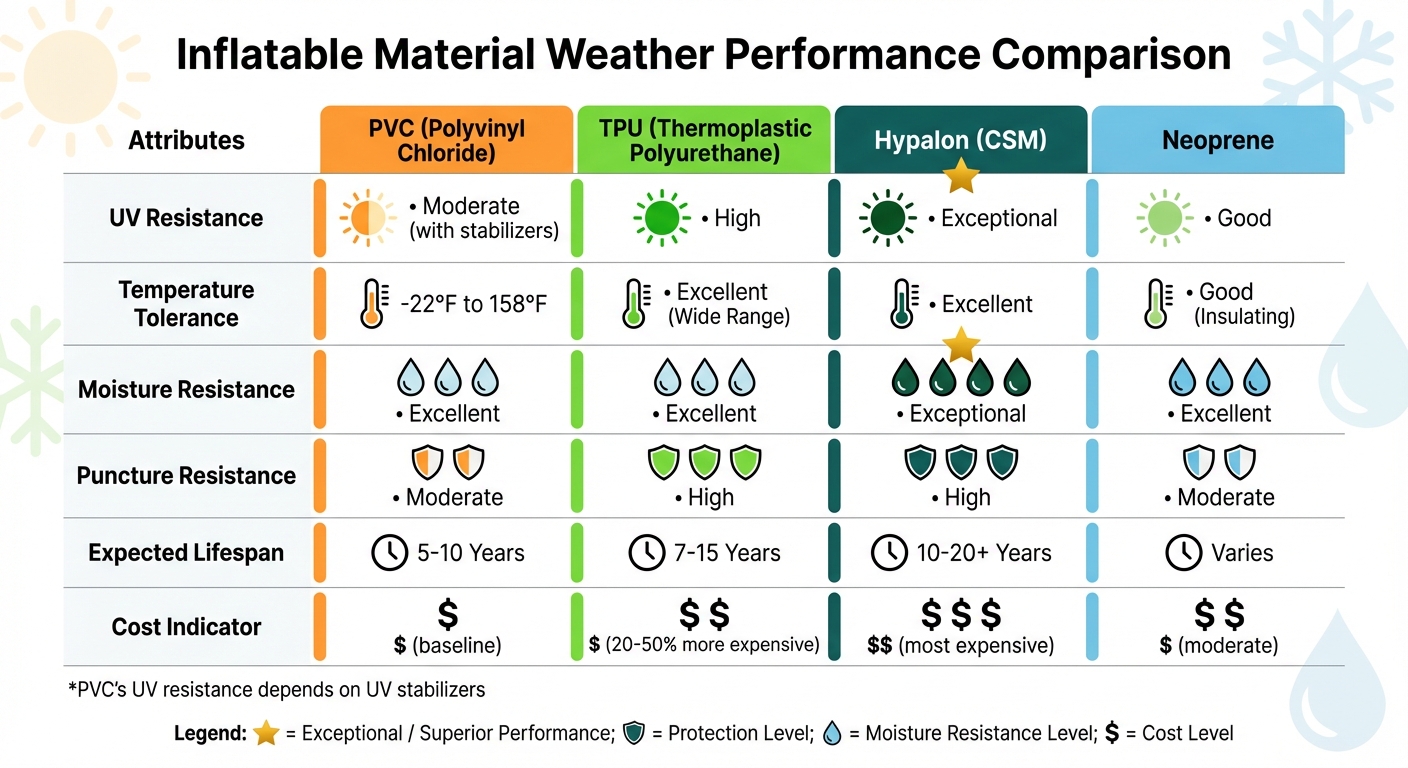
Weather Damage Comparison Chart for Inflatable Materials
When it comes to inflatables, the material they’re made from plays a huge role in how well they stand up to different weather conditions. Factors like UV exposure, temperature extremes, moisture, and general wear can all affect their durability. Knowing the strengths and weaknesses of various materials can help you make smarter choices for equipment that lasts. Here’s a closer look at how some common inflatable materials handle the elements.
Weather Resistance by Material
PVC (Polyvinyl Chloride) is the go-to choice for commercial inflatables. While its UV resistance is moderate, adding UV stabilizers can significantly improve its durability. For example, treated PVC retains about 95% of its original strength after a year of outdoor exposure. When properly treated, its color can stay vibrant for over three years in direct sunlight. PVC performs well in temperatures ranging from -22°F to 158°F, though it can stiffen in extreme cold. With regular care, PVC inflatables typically last between 5 and 10 years.
TPU (Thermoplastic Polyurethane) takes weather resistance up a notch. It offers better UV stability than PVC, holding onto its color, flexibility, and strength even under constant sunlight. TPU also stays flexible across a wide temperature range, resisting brittleness in both freezing and hot conditions. It’s tougher against punctures and generally lasts longer – about 7 to 15 years. However, this durability comes at a price, as TPU is typically 20% to 50% more expensive than PVC.
Hypalon (CSM) stands out for its incredible UV resistance, making it a top choice for harsh environments like tropical climates. With proper care, Hypalon inflatables can last 10 to 20 years or more, thanks to their strong resistance to environmental wear. On the downside, Hypalon is the heaviest and most expensive option, and its glued seams may weaken under extreme heat.
Neoprene offers solid UV and weather resistance and is often used in areas where flexibility is key, like air bladders or as a base layer. Its moisture resistance and insulating properties are excellent, but it doesn’t match TPU or Hypalon in puncture resistance.
| Material | UV Resistance | Temperature Tolerance | Moisture Resistance | Puncture Resistance | Expected Lifespan |
|---|---|---|---|---|---|
| PVC | Moderate (with stabilizers*) | -22°F to 158°F | Excellent | Moderate | 5–10 Years |
| TPU | High | Excellent (Wide Range) | Excellent | High | 7–15 Years |
| Hypalon | Exceptional | Excellent | Exceptional | High | 10–20+ Years |
| Neoprene | Good | Good (Insulating) | Excellent | Moderate | Varies |
*Note: PVC’s UV resistance depends heavily on whether UV stabilizers are added.
At Bouncy Rentals USA, we prioritize using durable, weather-resistant materials to ensure our inflatables stay safe and reliable, no matter the climate. Pairing high-quality materials with regular maintenance and knowing when to patch or replace equipment is the best way to extend the life of your inflatables and keep them performing their best.
Extending Inflatable Lifespan Through Weather Protection
Proper maintenance can add 3–5 years to an inflatable’s lifespan, even when faced with tough weather conditions like UV exposure, moisture, and temperature extremes. The secret? Consistent care routines that address these challenges head-on.
Start with cleaning and drying. After every use, wash the inflatable with mild soap, warm water, and a soft brush. Following a standard cleaning process ensures no debris is left behind to damage the fabric. Skip the bleach or harsh chemicals – they can strip UV coatings and weaken seams. Once cleaned, let the unit dry thoroughly by keeping it inflated for 30–60 minutes, paying extra attention to seams and creases. Deflating a damp inflatable can lead to prevent mold growth in as little as 24–48 hours, especially if stored in a sealed bag.
Storage matters just as much. Climate-controlled spaces between 50–80°F are ideal for storing inflatables. Cold temperatures can cause "cold crack", where frozen vinyl becomes brittle and breaks when unfolded. If an inflatable has been exposed to freezing conditions, give it 24 hours in a heated space to acclimate before use. On the flip side, extreme heat softens vinyl and weakens adhesives. Always avoid storing inflatables directly on concrete floors – use wooden or plastic pallets, or heavy-duty tarps as a barrier. Rolling, rather than folding, prevents permanent creases that can lead to leaks, and rotating storage positions every 2–3 months helps avoid compression marks from the unit’s weight.
A little maintenance goes a long way. Place 2–4 large silica gel packs inside storage bags to absorb moisture during long-term storage. To keep rodents away, use cedar blocks or peppermint oil around the storage area (but not inside the bags), as rodent damage can cost anywhere from $500 to over $2,000 in repairs or replacements. Before packing, lay down a tarp to protect the inflatable’s underside from dirt and abrasion.
At Bouncy Rentals USA, we take these weather-protection steps seriously to ensure our inflatables are always in top condition for your events. From thorough cleaning and drying to climate-controlled storage, we handle it all so you can count on reliable, high-performing equipment every time. These simple but effective routines, combined with proper weather protection, keep inflatables ready for action year-round.
FAQs
How can I tell if my inflatable is becoming unsafe?
Inspect your inflatable regularly for signs of wear and damage. Look out for tears, holes, fading, or mold, as these can compromise its safety and usability. Harsh weather conditions, like heavy rain or strong winds, can lead to problems such as mildew or weakened material. Performing checks, especially after severe weather, helps maintain its safety and longevity.
What’s the best way to dry an inflatable after rain?
To dry an inflatable after it gets wet, start by deflating it and carefully removing any standing water. You can do this by gently shaking it or wiping it down with a clean towel. Once the excess water is gone, place the inflatable in a shaded, well-ventilated spot to air dry. Pay special attention to seams and crevices to make sure they’re completely dry. If you’re in a hurry, fans or blow dryers on a low, cool setting can help speed things up. Taking the time to dry it thoroughly not only prevents mold but also helps keep your inflatable in good condition for longer.
Which inflatable material lasts longest outdoors?
PVC vinyl stands out as one of the most durable materials for outdoor use, with a lifespan of 5 to 10 years or even longer. Its ability to resist UV rays, water, and harsh weather conditions makes it a reliable choice for prolonged outdoor exposure.