Protecting your dunk tank starts with choosing the right cover material. Dunk tanks face constant exposure to weather, moisture, and UV rays, which can cause rust, mold, and damage to key components. The right cover can extend the lifespan of your equipment, reduce maintenance, and follow safety tips for water slides and dunk tanks to keep it looking professional for years.
Here’s a quick overview of the best materials for dunk tank covers:
- Canvas: Affordable and breathable but prone to shrinkage and requires regular waterproofing maintenance. Best for short-term or indoor use.
- Vinyl (PVC Tarpaulin): Fully waterproof, durable, and low maintenance. Ideal for frequent outdoor use or commercial settings.
- Aluminum/Metal Lids: Offers maximum protection against physical damage and rust but is heavier and more expensive.
- Polyethylene/Plastic: Lightweight, waterproof, and UV-resistant. A budget-friendly option with moderate durability.
Key Takeaway: For long-term outdoor use, vinyl or PVC tarpaulin provides the best balance of durability and waterproofing. For occasional use, canvas or polyethylene may suffice. Aluminum lids are best for heavy-duty protection but come with higher costs.
Below, we’ll break down the pros, cons, and costs of each material to help you make an informed decision.
1. Canvas Covers
Canvas covers are a classic choice, known for their breathable design made from cotton duck or synthetic polyester fibers. Their standout feature is breathability, which helps prevent moisture buildup and condensation – key factors in avoiding rust on metal parts and mold inside the tank. As White Duck Outdoors puts it, "In humid climates, canvas is king. It lets covered items ‘breathe,’ reducing rot and corrosion".
Durability
Heavyweight duck canvas – typically 14 oz/yd² or heavier – is highly resistant to tears and abrasion. For example, untreated 24 oz duck canvas can endure over 65,000 double rubs on the Wyzenbeek abrasion test before showing signs of wear. For dunk tank covers, #8 grade (15–18 oz) or #10 grade (12–15 oz) duck canvas is often recommended for its rugged outdoor performance. Canvas Etc. even notes, "Heavyweight duck canvas… is often more durable than Cordura Nylon", underscoring its reliability in tough conditions.
That said, canvas does have its weak points. The primary concern is shrinkage. Natural cotton canvas tends to shrink when exposed to water or heat, which can alter its fit over time. To counter this, it’s crucial to pre-shrink the material before final fitting.
Waterproofing
Canvas is water-resistant but not waterproof. Its tight weave can fend off light rain or splashes, but extended exposure to water will eventually saturate it. To maintain its water resistance, periodic reapplication of finishes like DWR or wax is necessary. This maintenance requirement makes it less convenient compared to fully waterproof options like vinyl or PVC.
UV Resistance
Untreated canvas is prone to fading and degrading under direct sunlight, so choosing UV-treated versions is essential for outdoor use. Many modern canvas tarps are treated for UV resistance, but these treatments wear off over time and need reapplication. Without proper UV protection, canvas covers will deteriorate faster than synthetic materials designed to withstand prolonged sun exposure.
Cost
Canvas tarps typically cost between $30 and $100 for a standard 10′ × 12′ size. This makes them more affordable than vinyl but more expensive than budget-friendly polyethylene options. However, you’ll need to account for ongoing costs like re-treatment products and potential replacement due to shrinkage or UV damage when assessing the overall investment. While canvas offers notable benefits, it’s important to weigh these against its limitations before considering alternative materials.
2. Vinyl Covers
Vinyl covers bring a modern edge to waterproofing needs, especially in environments where water exposure is constant. Unlike canvas, which is water-resistant, vinyl covers – commonly made from PVC tarpaulin – are fully waterproof. This makes them a go-to choice for high-moisture settings like dunk tanks. These covers are constructed with a polyester base fabric coated in PVC film, creating a seamless, non-porous barrier that stands up to splashes and even full submersion. As BounceWave Inflatable Sales explains:
Waterproofing is integral, making PVC the preferred choice for water slides, outdoor bounce houses, and inflatable castles exposed to changing weather.
Durability
PVC vinyl is built to last, offering impressive resistance to tears, punctures, and heavy use. Commercial-grade vinyl typically ranges from 15 to 18 oz in thickness, with some heavy-duty options reaching up to 20 oz/yd² (0.55–0.7 mm thick). High-quality PVC tarpaulin can endure over 100,000 flex cycles, making it a reliable choice for items that are frequently folded, unfolded, and handled during events. This durability naturally complements its standout waterproofing capabilities.
Waterproofing
Vinyl’s non-porous surface not only blocks water but also prevents mold and mildew growth, even with extended exposure to moisture. It maintains its waterproof qualities without requiring additional upkeep, providing a complete moisture barrier that can be easily wiped clean. For dunk tank covers that see heavy use, a minimum thickness of 15 oz is recommended to resist punctures and tears. This low-maintenance feature adds to its value, making it a practical and economical option.
Cost
While prices can vary, vinyl covers deliver excellent long-term value. Their durability and maintenance-free waterproofing make them a smart investment. Many commercial-grade vinyl options also meet NFPA 701 fire retardant standards and ASTM F2374-22 safety regulations, ensuring they meet safety requirements for event use.
3. PVC Covers
PVC covers take the durability of vinyl to the next level, offering industrial-grade strength and waterproof capabilities. These covers are a top pick for dunk tank protection, designed to endure heavy use and harsh conditions. Built with a high-strength polyester core encased in multiple PVC layers, they form an airtight, abrasion-resistant shield tailored for commercial settings. As Blaine Ladd explains:
PVC is the most durable, waterproof, and safe material for commercial inflatables… [it] outperforms nylon and oxford fabric in puncture resistance, longevity, and waterproofing.
Durability
PVC stands out for its toughness. High-quality PVC tarpaulin can handle over 100,000 flex cycles without significant wear, maintaining its integrity even with frequent use. Its tensile strength of 2,000–3,000N/5cm and tear resistance of 300–500N ensure it can take on the rough handling typical at events. Commercial-grade PVC, typically weighing between 500 and 1,000g/m² (around 15–20 oz/yd²), provides excellent stability, even in windy outdoor settings. This weight also helps keep the cover securely in place, reducing the chances of it being displaced. Such durability is the foundation of PVC’s impressive waterproof performance.
Waterproofing
PVC is a powerhouse when it comes to moisture protection. Its non-porous surface creates a complete barrier against water, and it resists mold and mildew even after repeated soaking. With a water column rating exceeding 3,000mm, PVC holds up under prolonged exposure to water. For commercial dunk tank covers, this translates to fewer repairs and a longer lifespan. As Bounce Horizon notes:
For rentals, PVC’s toughness means fewer repairs and happier customers.
UV Resistance
Sun exposure can quickly degrade lesser materials, but PVC is built to last outdoors. With a UPF 50+ rating, it incorporates UV stabilizers that block harmful rays. Premium PVC retains about 95% of its original strength after a full year of outdoor exposure, and it shows minimal wear even after 5,000 hours of accelerated UV testing. While oxford fabric might fade or weaken within a couple of years, PVC can maintain its performance for up to a decade.
Cost
Although PVC covers come with a higher initial price tag compared to canvas or basic polyethylene options, their long-term durability makes them a smart investment for commercial use. They resist punctures, tears, and UV damage, reducing the need for frequent replacements. For businesses hosting regular events, opting for commercial-grade PVC (at least 15–20 oz/yd² or 0.55–0.7 mm thick) ensures compliance with ASTM F2374-22 and NFPA 701 safety standards. This durability ultimately saves money over time by minimizing repair and replacement costs.
4. Aluminum/Metal Lids
Aluminum and metal lids provide a sturdy alternative to fabric covers, offering excellent protection against weather and physical damage. Unlike fabric options that rely on waterproof coatings, these rigid lids shield the tank’s internal components – like seat hinges and trigger mechanisms – from rust caused by rain or humidity. While vinyl covers can tear if something strikes an empty tank, metal lids absorb impacts without harming the tank itself. This makes them a standout choice in terms of durability, waterproofing, and cost-effectiveness.
Durability
When it comes to strength, steel leads the way with a tensile strength of 60,000–100,000 psi, compared to aluminum’s 45,000 psi. Steel also resists dents better, handling up to 0.5 inches of impact versus aluminum’s 0.3 inches. Over time, steel typically lasts 20 to 30 years in demanding environments, while aluminum averages 10 to 15 years. Steel also tolerates repeated stress more effectively, enduring over 50,000 pressure cycles, whereas aluminum handles between 20,000 and 30,000 cycles. However, this durability comes at a cost: steel is 2.5 times denser than aluminum, weighing 490 lb/ft³ compared to aluminum’s 169 lb/ft³.
Waterproofing
Both aluminum and steel excel at keeping moisture out, forming non-porous barriers that protect sensitive components from water damage. This is especially important for preventing rust-related issues like water seeping into trigger mechanisms. Steel, however, requires periodic powder-coating or galvanization to stay rust-free. Aluminum, while naturally resistant to atmospheric corrosion, can develop pitting when exposed to saltwater or when in contact with metals like brass. Additionally, both materials provide full UV protection, safeguarding internal vinyl liners from sun damage.
Cost
Aluminum is the more affordable option, costing around $250 compared to $500 for high-grade steel. For buyers on a budget, this lower price point can be appealing. However, steel’s longer lifespan and better impact resistance often justify its higher upfront cost, especially for commercial uses where durability is critical. While steel lids require regular maintenance to check for coating damage, aluminum’s lower dent resistance and shorter lifespan may lead to earlier replacement needs, potentially balancing out its lower initial cost.
5. Polyethylene/Plastic Covers
Polyethylene and plastic covers are a budget-friendly and lightweight option for protecting dunk tanks. They strike a balance between affordability and performance, offering specific advantages for this type of application.
Durability
Heavy-duty plastic covers are built to resist tears and punctures, making them well-suited for frequent rental use. Their abrasion resistance is another plus for busy environments. The choice between HDPE (High-Density Polyethylene) and LLDPE (Linear Low-Density Polyethylene) plays a role in performance. HDPE provides greater puncture resistance and rigidity, while LLDPE offers more flexibility and comes at a lower cost. These covers generally last between 5 and 10 years, placing them in the middle ground between fabric and metal options.
Waterproofing
Plastic covers excel in waterproofing thanks to their natural composition, which doesn’t require additional coatings. With waterproof ratings exceeding 10,000 mm, they provide excellent protection. They’re also resistant to mold and mildew when maintained properly. Cleaning is straightforward – just use mild soap and water, followed by thorough drying.
UV Resistance
High-quality plastic covers are treated with UV-resistant additives like carbon black or titanium dioxide, which prevent brittleness and cracking from long-term sun exposure. These covers can endure over 1,000 hours of UV exposure – about twice the resistance of most fabric alternatives. Opaque colors, such as black or dark green, are particularly effective since they block sunlight and help reduce algae growth.
Cost
Plastic covers offer excellent value by combining a low upfront cost with durability. They resist rust, corrosion, and impact damage, which helps keep long-term expenses low. Prices typically range from $400 to $2,500, depending on size and material density. Their lightweight design also reduces transportation and installation costs. Maintenance is minimal – plastic doesn’t need painting or rust-proofing, and small cracks can often be repaired using a poly welding gun rather than requiring a full replacement.
Pros and Cons Summary
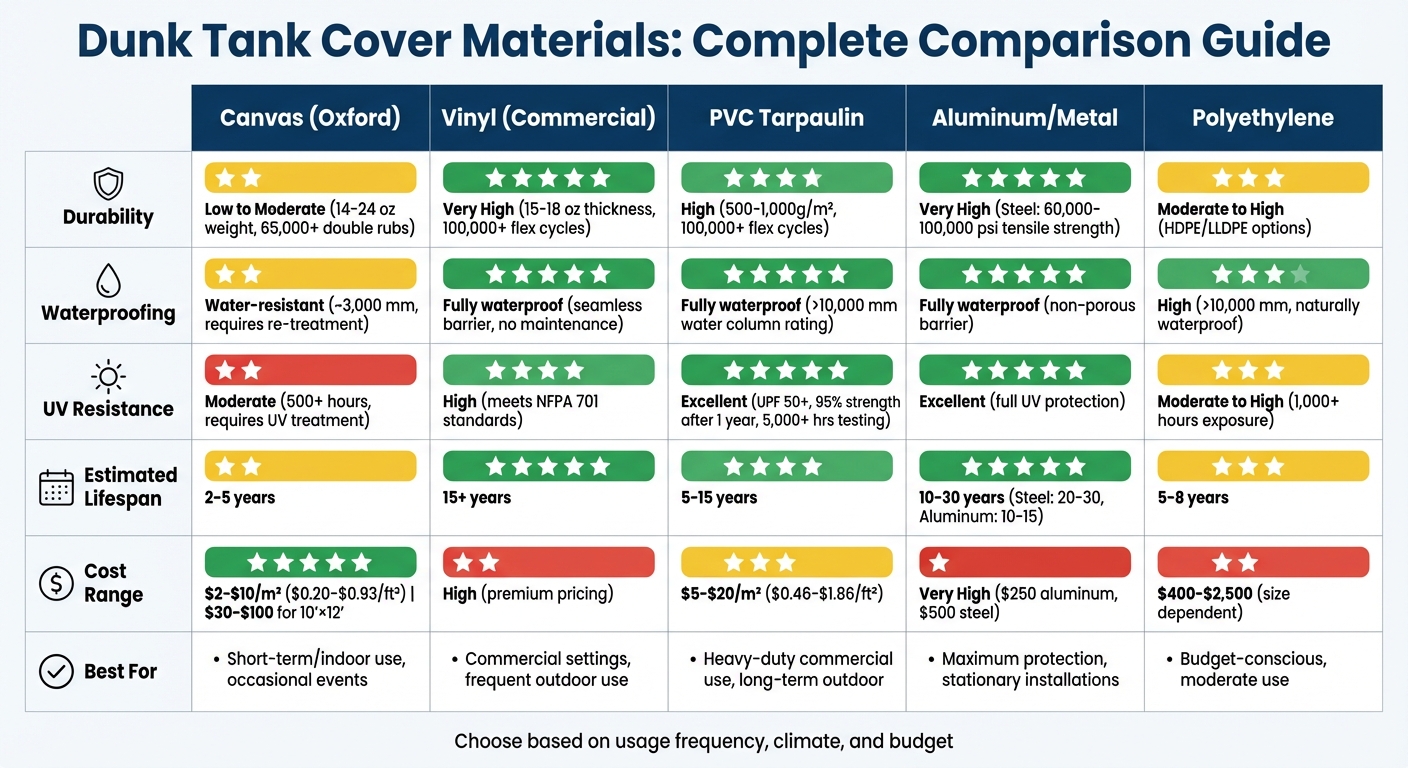
Dunk Tank Cover Materials Comparison: Durability, Waterproofing, and Cost
Here’s a quick breakdown of how different cover materials stack up in terms of durability, waterproofing, UV resistance, lifespan, and cost. This summary highlights the key advantages and limitations of each option, making it easier to match your needs with your budget.
Canvas covers are an affordable choice, ideal for short-term or indoor use. While they offer water resistance up to about 3,000 mm, their lifespan is relatively short, typically lasting 2 to 5 years.
Commercial vinyl and PVC tarpaulin provide a more durable and waterproof solution. Vinyl can last over 15 years, and PVC tarpaulin excels with waterproof ratings above 10,000 mm and a lifespan ranging from 5 to 15 years, depending on conditions.
Aluminum and metal lids stand out for their robust structural protection. When treated with powder coating or galvanization, they deliver excellent waterproofing and UV resistance, with lifespans exceeding 10 years. However, their heavier weight and higher cost may not be practical for setups that require frequent mobility.
Polyethylene covers strike a balance between cost and performance, offering good waterproofing and UV resistance. They typically last 5 to 8 years, with costs ranging from $400 to $2,500, depending on size and quality.
Here’s a side-by-side comparison of these materials:
| Material | Durability | Waterproofing | UV Resistance | Estimated Lifespan | Cost Range |
|---|---|---|---|---|---|
| Canvas (Oxford) | Low to Moderate | Water-resistant (~3,000 mm) | Moderate (500+ hrs) | 2–5 years | $2–$10/m² ($0.20–$0.93/ft²) |
| Vinyl (Commercial) | Very High | Fully waterproof | High | 15+ years | High |
| PVC Tarpaulin | High | Fully waterproof (>10,000 mm) | High (1,000+ hrs) | 5–15 years | $5–$20/m² ($0.46–$1.86/ft²) |
| Aluminum/Metal | Very High | Fully waterproof | Excellent | 10+ years | Very High |
| Polyethylene | Moderate to High | High (water-repellent) | Moderate to High | 5–8 years | $400–$2,500 |
This table should help you compare features and costs, allowing you to choose the best material for your dunk tank cover based on both performance and budget.
Conclusion
Choosing the right cover for your dunk tank boils down to how often you use it, where you store it, and how much you’re willing to spend. If you’re hosting an occasional backyard party or setting up indoors, lightweight canvas covers are an economical choice, costing around $2–$10 per square meter. However, keep in mind that they typically need replacement every 2–3 years. On the other hand, if you frequently host events or store your dunk tank outdoors, investing in heavy-duty PVC or 16 oz vinyl covers makes more sense. These options can last up to 10 years and are built to withstand tough weather conditions.
Your local climate also plays a big role in how well a cover performs. In sunny regions, UV-resistant materials like PVC tarpaulin or aluminum lids offer far better protection than basic canvas. For areas with heavy rain or snow, fully waterproof covers with a rating above 10,000 mm are essential to prevent water damage and mold. To extend the life of any cover, proper maintenance is crucial. Always let your cover dry completely before storing it to avoid mold growth. This simple habit benefits both budget-friendly and premium covers alike. If you’re using a dunk tank commercially or frequently, expect to spend about $100–$200 annually on maintenance for high-quality PVC covers. While premium materials may cost more upfront, they often save you money on replacements and upkeep over time.
Taking care of your cover ensures it lasts longer, and expert advice can help you make the best choice. If you’re renting a dunk tank or need help picking the right cover, Bouncy Rentals USA is a great resource. Their team understands the challenges of different climates and event types, ensuring their equipment – including covers – meets strict safety and durability standards. Whether you’re planning a one-time fundraiser or hosting regular community events, they can guide you to options that balance your needs and budget.
For occasional use, stick with lighter, affordable covers. For frequent or commercial use, go for premium materials that offer better protection and lower long-term costs.
FAQs
How do I measure my dunk tank for the right cover size?
To figure out the right cover size for your dunk tank, you’ll need to measure its length, width, and height. For length, measure from one end to the other. For width, measure across the widest part. And for height, go from the base to the top edge. Don’t forget to account for any curves or protrusions to ensure full coverage. Opt for a sturdy, water-resistant vinyl cover that’s a bit larger than your measurements for a snug and secure fit.
What cover thickness should I choose for outdoor use?
When choosing a cover for outdoor use, go for one made from sturdy PVC vinyl that is completely waterproof. Look for a thickness of about 10–15 mils or more. This level of thickness provides excellent durability and ensures the cover can handle prolonged exposure to the elements.
How should I store a dunk tank cover to prevent mold?
To keep mold at bay, make sure the dunk tank cover is thoroughly dry before storing it, especially after it’s been exposed to rain or snow. Store it in a cool, dry spot, away from direct sunlight, to protect it from moisture and UV damage. Opt for a breathable storage bag or container to allow proper air circulation. It’s also a good idea to inspect and clean the cover regularly to prevent mold and mildew buildup.